Green Coffee vs Green Tea: What's the Difference?
By Akemi Coffee Guide Editorial Team · Published · Last updated: · 6 min read
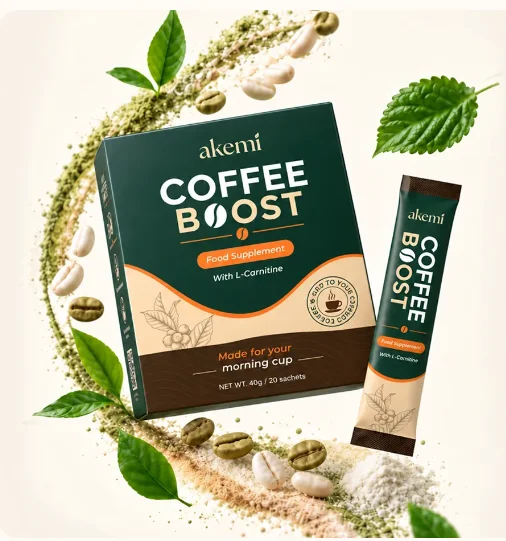
Green coffee and green tea come from completely different plants. Green coffee is unroasted coffee beans, rich in chlorogenic acids. Green tea comes from the leaves of Camellia sinensis and is known for catechins such as EGCG. Both contain caffeine, and both are commonly used in wellness supplements.
Let's look at where each comes from, what's in them, and why some supplements – including Akemi Coffee Boost – use both.
Where Do They Come From?
Green coffee
Coffee beans are the seeds of the Coffea plant's fruit. Before roasting they are pale green, hard and grassy-smelling. Roasting transforms them into the brown, aromatic beans we grind and brew. Green coffee extract is made from the unroasted beans.
Green tea
Green tea is made from the leaves of Camellia sinensis – the same plant used for black and oolong tea. For green tea, the leaves are heated soon after picking to prevent oxidation, which helps preserve their natural compounds and fresh colour.
What Are the Key Compounds?
The main difference lies in their signature plant compounds:
- Green coffee: chlorogenic acids, a family of polyphenols that are largely lost during roasting.
- Green tea: catechins, especially epigallocatechin gallate (EGCG), plus the amino acid L-theanine.
Both groups of compounds are being studied for their potential roles in wellbeing, and both are popular in weight-management formulas. Research findings are mixed and still developing, so it's wise to treat any bold claims with caution.
Which Has More Caffeine?
Both contain caffeine, but amounts vary by product and preparation. As a rough guide, a cup of brewed green tea usually contains less caffeine than a cup of brewed coffee. Extracts can be concentrated or partially decaffeinated, so always check the label.
If you add a supplement containing green tea or green coffee extract to your coffee, the caffeine adds up. People who are sensitive to caffeine, pregnant or breastfeeding should be especially careful.
How Do They Taste?
Brewed green tea tastes fresh, grassy and sometimes slightly sweet or bitter depending on steeping time. Green coffee, brewed as a drink, is quite different from regular coffee – lighter, more herbal and acidic. In supplement form, the extracts are used in small amounts, so they have little effect on the taste of your regular cup.
Side-by-Side Comparison
- Plant: Coffea (green coffee) vs Camellia sinensis (green tea).
- Part used: unroasted seeds vs leaves.
- Signature compounds: chlorogenic acids vs catechins (EGCG) and L-theanine.
- Caffeine: present in both; varies by product.
- Typical use: drinks and supplements for both.
Why Combine Them in a Supplement?
Because green coffee and green tea provide different plant compounds, some formulas combine them for a broader profile. Akemi Coffee Boost, for example, includes both alongside white kidney bean extract, mulberry leaf extract, L-Carnitine and two fibres. You can read about each one in our ingredients explained guide.
As with any supplement, these ingredients are best seen as a supporting part of a lifestyle built on balanced meals, movement and good sleep.
Which Is Better?
Neither is objectively 'better' – they're simply different. If you enjoy tea, a few cups of green tea can be a pleasant part of your day. If you're a coffee lover, you might prefer adding a supplement to your usual cup. The best choice is the one that suits your taste, routine and caffeine tolerance.
Want to try a coffee-based routine? Read our Akemi Coffee Boost review or return to our Akemi Coffee Boost overview.