Akemi Coffee Boost Ingredients Explained
By Akemi Coffee Guide Editorial Team · Published · Last updated: · 8 min read
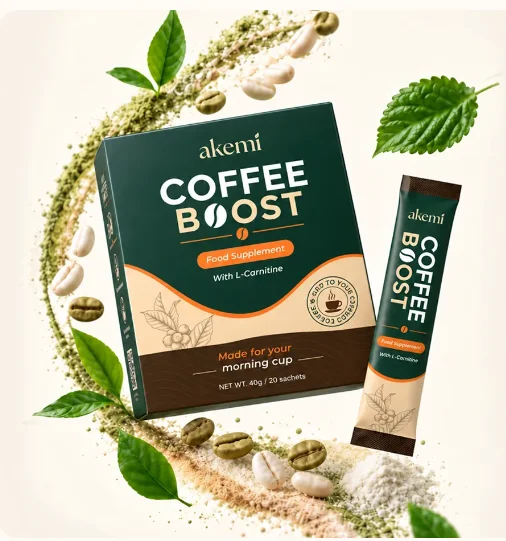
Akemi Coffee Boost contains seven ingredients: Green Tea Extract, Green Coffee Bean Extract, White Kidney Bean Extract, Mulberry Leaf Extract, L-Carnitine L-Tartrate, Resistant Dextrin and Psyllium Husk Powder. Each is commonly used in wellness and weight-management supplements, and each has a slightly different role.
Below we explain every ingredient in plain Australian English, without hype. Where research exists, we describe it carefully – many of these ingredients are still being studied, and individual results vary. Always check the full ingredient list and directions on the packaging.
Green Tea Extract
Green tea extract is a concentrated form of the compounds found in green tea leaves (Camellia sinensis). Its best-known components are catechins, particularly epigallocatechin gallate (EGCG), along with a small amount of naturally occurring caffeine.
Green tea has been part of daily life across Asia for centuries, and today its extract is widely used in wellness supplements. It is often associated with energy and an active lifestyle. Because it contains caffeine, it adds to the total caffeine you get from your coffee – something to keep in mind if you are sensitive.
Green Coffee Bean Extract
Green coffee bean extract is made from coffee beans that have not been roasted. Unroasted beans are rich in chlorogenic acids, natural plant compounds that are largely lost during the roasting process that gives coffee its familiar flavour and colour.
It is a popular ingredient in weight-management formulas. Research on chlorogenic acids is ongoing, and results across studies have been mixed, so it is best viewed as one supporting component rather than a headline act. Like green tea, it also contributes some caffeine. If you are curious how the two compare, read our green coffee vs green tea guide.
White Kidney Bean Extract
White kidney bean extract comes from Phaseolus vulgaris, the same family of beans you might find in a supermarket tin. The extract has been studied for its interaction with alpha-amylase, the enzyme that helps break down starch during digestion.
It is commonly included in formulas for people who are watching their carbohydrate intake. It does not replace sensible portion sizes or a balanced plate, but it is a frequently used ingredient in this category.
Mulberry Leaf Extract
Mulberry leaves (from the white mulberry, Morus alba) have been used in traditional Asian diets and teas for centuries. The extract contains natural compounds, including one called 1-deoxynojirimycin (DNJ), that are being studied in relation to how the body handles carbohydrates after meals.
Because of this research area, anyone taking medication to manage blood sugar should talk to their doctor before using any product that contains mulberry leaf extract.
L-Carnitine L-Tartrate
L-Carnitine is a compound the body produces naturally and also obtains from foods such as red meat and dairy. It plays a role in transporting fatty acids into the cells' mitochondria, where they are used for energy.
The L-tartrate form is a common, stable version used in supplements. L-Carnitine is a well-known ingredient among active people and fitness enthusiasts. Its role in energy metabolism is well established, although supplementing it does not by itself guarantee any particular outcome.
Resistant Dextrin
Resistant dextrin is a soluble dietary fibre usually made from wheat or corn starch. It dissolves easily and has a neutral taste, which makes it practical for a powder you stir into coffee.
Fibre is an important part of a balanced diet and contributes to a feeling of fullness. Many Australians fall short of the recommended daily fibre intake, so small additions can be helpful – though whole foods like vegetables, legumes and wholegrains should remain the foundation.
Psyllium Husk Powder
Psyllium husk comes from the seeds of Plantago ovata. It is a natural source of soluble fibre that absorbs water and forms a gel-like consistency in the gut.
It is commonly used to support regular digestion and a sense of satiety. Because psyllium absorbs water, drinking enough fluid across the day is essential when using any product that contains it.
Who Is It Suitable For?
Akemi Coffee Boost is made for adults who already enjoy a daily coffee and want an easy wellness habit to go with it. It may suit people who:
- Prefer simple routines over complicated supplement regimes.
- Don't enjoy swallowing capsules or mixing shakes.
- Want to add a little fibre to their day.
- Are already working on balanced meals, movement and sleep.
It is not designed for children or teenagers, and it is not a substitute for a varied and balanced diet.
Possible Side Effects and Who Should Avoid It
Does Akemi Coffee Boost have side effects? Most people tolerate these types of ingredients well, but some may notice effects – mainly related to caffeine and fibre.
Caffeine sensitivity
Green tea and green coffee both contain caffeine, which adds to the caffeine in your cup. If you are sensitive, you might notice jitters, a racing heart or trouble sleeping. Using it in the morning rather than later in the day is sensible.
Digestive changes
Fibre from psyllium and resistant dextrin may cause bloating or changes to bowel habits, especially if your current fibre intake is low. Drink plenty of water and give your body time to adjust.
Who should speak to a doctor first
If you are pregnant, breastfeeding, taking medication (especially for blood sugar), or have a medical condition, speak to your doctor or pharmacist before using Akemi Coffee Boost. Psyllium can also affect how some medications are absorbed, so spacing them apart may be advised.
Want the full picture? See our Akemi Coffee Boost review or return to our Akemi Coffee Boost overview.